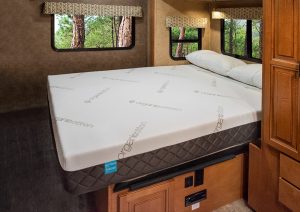
While the average mattress thickness for standard everyday mattresses falls between between 8 and 14 inches, “average” changes depending on where the mattress is used.
For a standard residential mattress, the average mattress thickness falls between 8 and 14 inches. This range works well for most adults and fits the majority of bed frames designed for home use.
This number changes depending on what kind of mattress we’re talking about:
Sofa bed mattresses are significantly thinner because they must fold inside the sofa frame.
RV mattresses are often slimmer as well, since ceiling height and storage space are limited.
Mattress thickness refers to the total height created by the internal layers of the mattress.
A 2 to 5 inch mattress is considered low-profile. This is the thinnest category available and is typically used where space or safety is a primary concern.
Common uses:
Sofa bed mattresses usually fall around 4 to 4.5 inches, which allows the mattress to fold without damaging the sofa mechanism.
A 6 to 7 inch mattress is often ideal for RVs, where headroom is limited but comfort still matters. Slim-profile mattresses also make getting in and out of bed easier for kids or people with mobility concerns.
Being a bit thicker than the thinnest options, these offer more flexibility in terms of comfort and support.
The standard profile is the typical “average” mattress thickness that works for most adults. Aside from 8” RV mattresses, the standard profile is almost exclusively used for residential mattresses.
As this is the most common mattress thickness, you’ll find tons of options in for all preferences and budgets, including great 10” mattress options.
An 8-inch mattress can also work well in RVs when ceiling height allows, offering a more residential feel without excessive bulk.
Extra-thick mattresses are designed primarily for aesthetic preference rather than necessity.
Things to consider:
Most manufacturers stop at 16 inches, but custom mattresses can exceed this if desired. For sleepers with specific comfort needs, customization often delivers better results than added height alone.

2–5 inches
Tight spaces
Sofa beds, trundles, cribs
6–7 inches
Low clearance beds
RVs, campers, kids’ beds
8–14 inches
Daily adult sleep
Residential bedrooms
16+ inches
Visual height preference
Luxury or custom beds
Not necessarily.
While thicker mattresses allow for more layers, and potentially more comfort options, thickness alone does not determine quality. A well-designed 8-inch mattress can outperform a poorly built 14-inch one.
Thicker mattresses may benefit:
Comfort ultimately depends on design and construction, not mattress height.
Thickness can influence:
That’s it. No complicated math required!
Our team of real people is here to help!
Start by measuring the space where the mattress will be used. Factor in:
In RVs and campers, mattress height often affects both comfort and headroom. Shorter mattresses also limit firmness options, while standard heights offer greater flexibility.
When buying a mattress, a bed’s total height is a key factor.
The bed’s total height is the combined height of the bed frame and the mattress. If the total height is too tall or too short, you will struggle to get in and out of bed each day.
Ideally, you should aim for a total height that allows you to easily place your feet on the floor when sitting on it. Your knees should be at a 90-degree angle, so you avoid excess strain when standing.
While the average mattress thickness for standard everyday mattresses falls between between 8 and 14 inches, “average” changes depending on where the mattress is used.
Not necessarily. While thicker mattresses allow for more layers, and potentially more comfort options, thickness alone does not determine quality. A well-designed 8-inch mattress can outperform a poorly built 14-inch one.
18 scientifically proven tips
(for 2025) that you can use tonight.