Image source X: @ariannahuff
Founder of The Huffington Post, Arianna has become a champion of sleep. After a big issue of simply not getting enough sleep for a period of her life, she actually wrote a book on sleep itself.
Her wisdom shows in a relaxing and intuitive night time routine.
“I’ve always figured out that there 24 hours a day. You sleep six hours and have 18 hours left. Now, I know there are some of you out there that say well, wait a minute, I sleep eight hours or nine hours. Well, then, just sleep faster, I would recommend.”
Arnold Schwarzenegger
Like Arianna Huffington, Arnie does not take his iPad or iPhone into the bedroom — a practice recommended by many, as the blue light given off by screens has been proven to disrupt sleep cycles.
He also notes that he doesn’t get into any “heavy debates” about business that could negatively activate his nervous system an hour or two before he goes to bed.
According to Arnold, early risers tend to be the most successful people, but he also emphasizes that it’s important not to get hung up about the sleep itself when you could be more focused on organizing your day effectively.

Image source X: @TonyRobbins
Tony states that he gets between four and five hours sleep a night, going to bed with his wife (who requires eight hours sleep) and watching a movie or typing on his computer while he winds down.
But he also admits that he has a secret weapon — a device called NuCalm.
It works on a variety of levels, placing you into a deep state of relaxation, and is even used by dentists in place of typical anesthetic. According to Tony, he uses this device for only 27 minutes to achieve rest equivalent to roughly two hours of sleep. While very expensive, it’s worth a read.
X: @garyvee
Gary Vaynerchuk, the founder of Wine Library TV and more recently Vaynermedia, is known for his focus and hustle. But his views on sleep (which he documented way back in episode 34 of his show “Ask Gary Vee”) are equally interesting.
Gary states that he tries to get at least six or seven hours of sleep each night, stating that sleep, rest, and recharging is important.

(Image source http://tim.blog/) X: @tferriss
Tim Ferriss is the founder of The 4 Hour Work Week, The 4 Hour Chef and Tools of Titans. He also runs a blog where he talked about the night time routine that took him from an insomniac to a heavy sleeper:
X: @neilpatel
Neil Patel is an online marketing expert who is the co-founder of QuickSprout, Crazy Egg, and Hello Bar. He helps companies like Amazon, NBC, GM, HP and Viacom grow their revenue.
Neil’s Tip:
“I make sure I take my eyes off technology for at least an hour prior to bed. Also, have you tried meditation — that really helps!”
X: @NathanHChan
Nathan is the man behind the amazing Foundr Magazine, featuring Gary Vaynerchuk, Richard Branson, Tony Robbins, and many more.
Here are his tips:
X: @Backlinko
Brian Dean is the founder of Backlinko, a blog that helps people to increase their search rankings in Google. Brian is one of the world’s most in demand SEO experts.
Here’s what his routine and advice looks like:
1. “Don’t do anything work related (even talking about work) two hours before bed. Otherwise, the mind goes into ‘problem-solving mode’.”
2. “Read a fiction book (or a story-focused nonfiction book) in bed before you go to sleep. This pushes you towards your right brain.”
3. “That’s it. I’ve found those two things help me go to sleep pretty much on command.”
Michaela Breeze is an Olympic Weightlifting Champion, record holder, and now coach.
“My Ideal amount of sleep is 9 hours.”
“I ensure everything required for the next day is packed/prepared and in order ready to go. Double check I’ve got everything. I try not to have superstitions or anything like that. Just try to be relaxed by watching TV or a film, then get to bed at a reasonable time… 10pm-ish. Have ear plugs handy in case I get woken up.”
“Learn and practice some breathing and relaxation techniques to help switch off the mind and prevent overthinking. If the preparation has been done with no stone left unturned, then all you have to do on the day is give it your best. You can’t do any more than that.”
X: @dknowlton1
Daniel Knowlton is the founder of KPS Digital Marketing and is one of the top 100 digital influencers in the world.
“7 to 9 hours.”
“Go to the gym, eat healthily, be fully prepared and have an early night.”
“Tip 1: Step back and work out why you are stressed.
Tip 2: Think long and hard if the stress is worth the return you are getting from what you are doing to make you stressed (here’s a hint: it’s probably not).
Tip 3: Come up with a plan to be less stressed. If it’s a job that’s making you stressed, then plan how you can follow your passion or change jobs. If it’s a relationship, take action to resolve or end it, etc.
Rather than working out how to sleep whilst you are stressed, I believe it’s better to find out the root cause behind why you are stressed and take action to remove it.”
X: @judoHannah
Hannah is an elite Judo competitor who travels the world for her sport.
“When I am competing, I am usually competing in a different time zone.
The time zones vary from six to 13 hours ahead of New York’s Eastern Standard Time. So when I’m competing, it can be quite difficult to fall asleep at the proper time and to stay asleep the whole night.
I usually arrive two days before I compete and my goal is to try to get proper sleep right away.
When I arrive, I usually get a workout in and eat a proper meal and then take melatonin (which is a natural sleeping aid) to help me stay asleep the whole night.
I do not take sleeping aids the night before a big competition because I usually end up waking up feeling drowsy and sluggish. The goal is to try to get to bed at a proper time and try to sleep the whole night.”
“1. Relax with some nighttime tea
2. Turn off social media, TV and all electronics and read a book.
3. Take a hot bath before bed and close your eyes and meditate or visualize what you want to accomplish.”
Sam Hurley is a digital marketing expert and ranked as the #1 global digital marketing influencer.
“6 to 8 hours.”
“This is tough because I have a VERY active mind and when I know there’s something important happening the next day, it goes into hyperdrive. I try to watch a funny film and get a really early night.
Preparation is key. If there’s anything left to sort out in the morning, I will be thinking about it all night.”
“Tip #1: Go to a gym, sauna, jacuzzi and steam room! Without a doubt, this is my number one.
Tip #2: Don’t eat late and stay away from sugary foods altogether. Consume lots of fresh fruit and veg. A healthy diet makes such a huge difference.
Tip #3: Before going to bed, take a walk or a drive if possible, with the windows down. I love doing both, it just helps clear my head and the fresh air feels fantastic (it’s always nice to get away from tech!)
I’ve also recently started listening to calming music/sounds which I find really soothes and helps state of mind.”
The average person sleeps around eight hours a day — which doesn’t seem like a lot, but actually amounts to around 229,961 hours, or about 25 years.
In an interview with BBC News, Professor Nedergaard from the University of Rochester Medical Centre gave insight into the power of sleep.
During her studies, they discovered that the brain uses sleep to increase neural connections and cleanse the brain of toxins.
“You can think of it like having a house party. You can either entertain the guests or clean up the house, but you can’t really do both at the same time.”
Further studies have shown that sleep allows us to “reset our brain”. A psychiatrist named Christoph Nissen who led a study at the University of Freiburg says:
“When we are awake, the synapses that form connections between our brain cells strengthen more and more as we learn and eventually saturate our brains with information.
The process requires a lot of energy, but sleep allows the brain to wind down its activity, consolidate our memories, and be ready to start again the next morning.”
There are four stages of sleep that we go through every night.
Have you ever had that sensation of falling? If you have, then you have entered the first stage of sleep where your body starts to relax.
In the second stage of sleep, your brain waves start to slow down, further relaxing you.
At this point, your slower brain waves are interspersed with faster ones and you are in very deep sleep tougher to be woken from.
The final stage of sleep is rapid eye movement, or REM, sleep. This is where the eyes start to move, the pulse begins to quicken, and you dream.
Tip 1: Remove electrical devices from the room
Tip 2: Don’t read any business or non-fiction books before bed
Tip 3: Drink a cup of tea
Tip 4: Have a warm bath
Tip 5: Meditate
Additional supplements: NuCalm, Epsom Salts, and Melatonin.
Our team of real people is here to help!
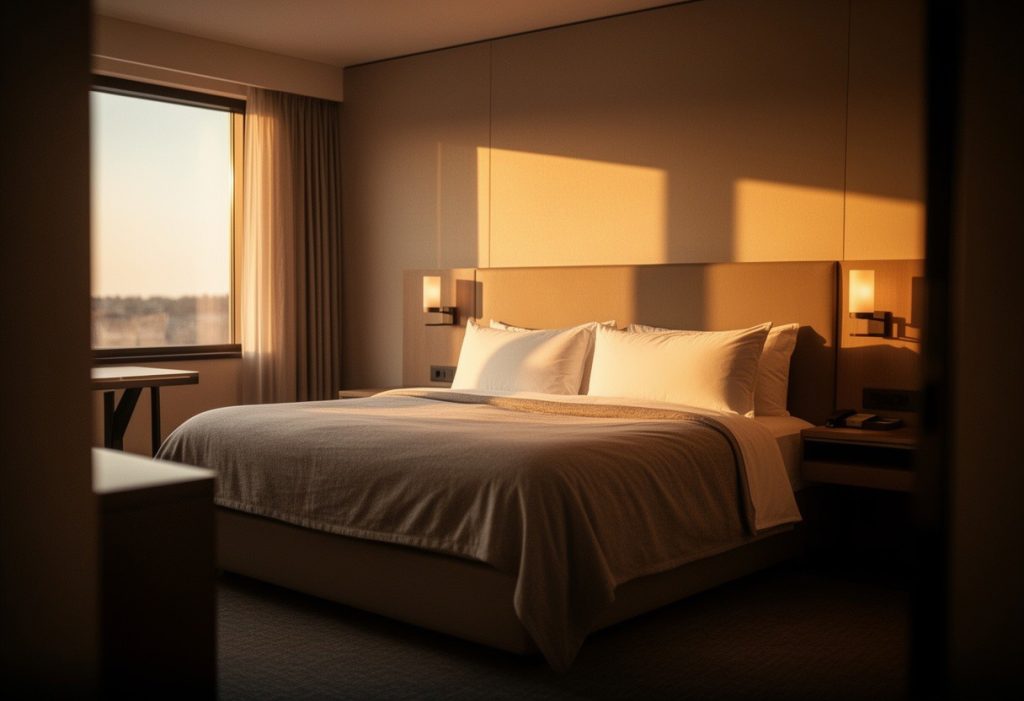
Some of the best sleeping tips include removing electrical devices and screens from your bedroom, drinking a cup of relaxing tea (with no caffeine), and having a warm bath or meditating before bed.
18 scientifically proven tips
(for 2025) that you can use tonight.